Puccini
La Bohème
Sydney Opera House2 January–17 March 2027
Puccini
La Bohème
Sydney Opera House2 January–17 March 2027
Choose a Location:
Cast, dates, times and prices will vary depending upon location selected
Location: Sydney
Choose a date to see seats and prices
See All Events2027
January
Sat
02 Jan 2027
02 Jan 2027
Tue
05 Jan 2027
05 Jan 2027
Thu
07 Jan 2027
07 Jan 2027
Sat
09 Jan 2027
09 Jan 2027
Tue
12 Jan 2027
12 Jan 2027
Thu
14 Jan 2027
14 Jan 2027
Sat
16 Jan 2027
16 Jan 2027
Wed
20 Jan 2027
20 Jan 2027
Fri
22 Jan 2027
22 Jan 2027
Mon
25 Jan 2027
25 Jan 2027
Thu
28 Jan 2027
28 Jan 2027
Sat
30 Jan 2027
30 Jan 2027
February
Mon
01 Feb 2027
01 Feb 2027
Wed
03 Feb 2027
03 Feb 2027
Sat
06 Feb 2027
06 Feb 2027
Tue
09 Feb 2027
09 Feb 2027
Thu
11 Feb 2027
11 Feb 2027
Sat
13 Feb 2027
13 Feb 2027
Wed
17 Feb 2027
17 Feb 2027
Sat
20 Feb 2027
20 Feb 2027
Tue
23 Feb 2027
23 Feb 2027
Fri
26 Feb 2027
26 Feb 2027
March
Tue
02 Mar 2027
02 Mar 2027
Thu
04 Mar 2027
04 Mar 2027
Sat
06 Mar 2027
06 Mar 2027
Tue
09 Mar 2027
09 Mar 2027
Thu
11 Mar 2027
11 Mar 2027
Sat
13 Mar 2027
13 Mar 2027
Wed
17 Mar 2027
17 Mar 2027
Availability: good medium low sold-out
Tickets are currently on pre-sale. Sign up now for pre-sale access.
Venue
Joan Sutherland Theatre, Sydney Opera House
Bennelong Point, Sydney
Language
Performed in Italian with English and Simplified Chinese surtitles.
Running time
Approximately 2 hours and 15 minutes, including one interval.
Book a multi-show package and save up to 20%*
Combine this production with one or more shows in the 2027 Season and become a Season Subscriber. You’ll unlock a ticket discount, priority booking, and free ticket exchanges, among other exclusive benefits.
To write, to paint, to think, to cry. To love, to fight, to live, to die.
They have love. They have art. They have each other. But you can’t eat poetry, and philosophy won’t warm a bitter winter.
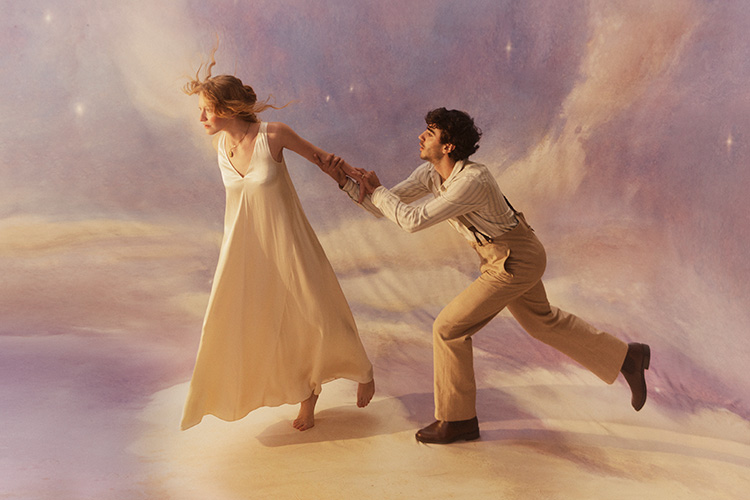
This classic opera about young artists caught between ecstasy and pain has inspired countless Bohemian love stories. Now it’s time for a fresh production of this timeless tale, created by our most exciting young creatives. Constantine Costi leads a talented team to create a new La Bohème, set in snow-kissed Paris and shimmering with magic.
Puccini’s music captures feelings you can’t put into words. It swells with the intensity of first love, burns with jealousy, sighs in passion and breaks with sadness. This is opera to remind you of the power of love, of the beauty of youth, and the sheer joy of being alive.
Our esteemed Music Director, Andrea Battistoni and award-winning conductor Matteo Dal Maso draw every aching nuance out of Puccini’s score, with a series of stellar singers: Maria Teresa Leva, Samantha Clarke and Jennifer Black share the role of Mimì, with rising Italian star Matteo Desole as Rodolfo, sharing the role with Paride Cataldo and Iain Henderson.

Cast & Creative
Conductor
Andrea Battistoni
(2 Jan–9 Feb)
Matteo Dal Maso
(11 Feb–17 Mar)
Director
Set Designer
Dann Barber
Costume Designer
Lighting Designer
Movement Director
Mimì
Maria Teresa Leva
(2–22 Jan)
Jennifer Black
(25 Jan–1 Feb & 11–17 Mar)
Samantha Clarke
(3 Feb–9 Mar)
Rodolfo
Matteo Desole
(2 Jan–1 Feb)
Paride Cataldo
(3 Feb–9 Mar)
Iain Henderson
(11–17 Mar)
Musetta
Alexandra Flood
(2–9, 14, 20, 25, 28 Jan & 1 Feb)
Nina Korbe
(12, 16, 22, 30, Jan, 3 Feb–9 Mar)
Rachelle Durkin
(11–17 Mar)
Marcello
Jeremy Boulton
(2 Jan–1 Feb)
Luke Gabbedy
(3 Feb–17 Mar)
Schaunard
Stephen Marsh
(2 Jan–1 Feb)
Leon Vitogiannis
(3 Feb–9 Mar)
Jake Lyle
(11–17 Mar)
Colline
David Parkin
(2 Jan–1 Feb)
Jake Bigwood
(3 Feb–17 Mar)
Benoît
Alcindoro
Simon Meadows
(2 Jan–1 Feb)
Shane Lowrencev
(3 Feb–17 Mar)
Opera Australia Orchestra
Opera Australia Chorus
Opera Australia Children’s Chorus
Cheat Sheet: La Bohème
Everything you need to know about one of the world's most popular operas.
What happens in the story? Who was the composer? What should I expect from the music? Here’s everything you need to know…
La Bohème: Step inside the painting
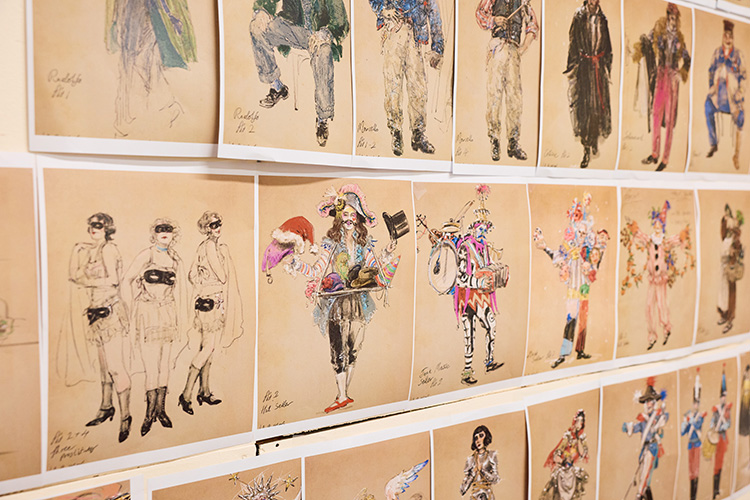
The artists creating a new La Bohème
Set designer Dann Barber, costume designer Sabina Myers and lighting designer Morgan Moroney reveal how they built a Paris of colour, craft and imagination.
Synopsis
ACT I
It is Christmas Eve. Rodolfo, a poet, and Marcello, a painter, are freezing in their studio. Marcello is painting The Crossing of the Red Sea. Colline, a philosopher, arrives as the fire Rodolfo has lit with one of his manuscripts, flickers and dies. Schaunard brings reinforcements – food, wine and fuel for the fire, bought with unexpected money from his earnings as a musician.
A knock at the door and Benoit, the landlord, arrives demanding the rent. The four Bohemians ply him with wine and then bundle him off. Marcello, Colline and Schaunard go off to join the celebrations at the Café Momus. Promising to join them soon, Rodolfo settles down to finish an article he is writing.
There is another knock. This time it is a neighbour, Mimì – a beautiful young seamstress, holding her key and an unlit candle. She begs a light and Rodolfo obliges. Mimì departs and drops her key. Together they search for the key, and their hands touch. They tell each other about themselves and Rodolfo passionately declares his love. The new lovers then set off into the night to join the others.
ACT II
The square in which the Café Momus is situated is the Bohemians’ favourite haunt, bustling with shoppers and hawkers. Rodolfo buys his new love a bonnet.
At the café, Marcello’s old flame, Musetta, appears with a new admirer, Alcindoro. To attract Marcello’s attention, Musetta bursts into her famous waltz song. Marcello responds and Musetta, pretending that her shoe is pinching, dispatches Alcindoro to a cobbler. She joins in the revelry with Marcello and his friends. When they depart they leave a reminder for the hapless Alcindoro on his return – a huge bill!
ACT III
It is daybreak just inside a tollgate. Snow lies on the ground. Mimì emerges from the throng of workers. She is looking for Marcello at a nearby inn where he and Musetta have been living for the past month. Pale and agitated, she tells him of Rodolfo’s jealousy which has made their life together impossible.
Mimì hides as Rodolfo suddenly appears. He declares her to be unfaithful, but then confides to Marcello that Mimì is very ill and blames himself and his poverty for not being able to help her. Mimì’s sudden coughing betrays her presence and the lovers sadly decide it is best that they part.
Their parting duet is interrupted by the sounds of a fierce quarrel between Marcello and Musetta. Mimì and Rodolfo decide to stay together until spring returns.
ACT IV
The studio, months later. Both pairs of lovers have now parted. Mimì and Musetta have found wealthy admirers. Rodolfo and Marcello feign indifference, but neither can forget the memory of his love. Schaunard and Colline arrive with meagre food and the four sit down to a mock ‘banquet’.
While they are acting the fool, Musetta rushes in with news that Mimì is desperately ill and has asked to be brought back to Rodolfo to die. Musetta explains that the Viscount has discarded Mimì and she has been living on the streets for weeks sinking further into poverty and desperation. The Bohemians rally to the cause. Musetta pawns her earrings and Colline his beloved coat to buy medicine for Mimì.
Alone for a short time, Mimì and Rodolfo recall the past, reliving their short spell of happiness and their dreams together. Mimì, seized by a coughing fit, falls back, exhausted. When the others return, she weakly thanks them for their kindness and falls asleep.
It is Schaunard who first notices that Mimì is dead. Rodolfo is the last to realise, by seeing the truth on his friends’ faces.
Read More